Everybody has a dream.
I know I had a few.
And it hurts a little bit more
Everyday
Knowing that.
Sunday, March 25, 2012

Tuesday, March 06, 2012
not enough
there's just not enough song that can capture the very nature of your emotion, there's just not enough movie to relate to, there's just not enough sleep to make you forget, there's just not enough drug to make you feel numb, there's just not enough smoke to make you fill the void, there's just not enough quotes and words of wisdom to make you cast your doubts and clear your clouded thoughts, there's just not enough hugs and kisses to make you feel you're not alone...there's just not enough...
Wednesday, February 15, 2012
Poetic Nonsense
It was pouring hard the night I hailed the cab to take me to the bus stop and there's this song playing over the radio. It must be a newly released song because it was the first time I have heard it or maybe I haven't been listening to radios anymore since my retirement as a radio disc jockey. I used to have a weird way of relating an event in my life to a song. In my mind, my life's moments are theatrical scenes that deserved to have a musical score to make it even more dramatic. I have stopped doing that for a while now, but it does have a way of coming back to me at the most opportune time. I say it is weird because nobody does that really and it is just overly dramatic that one who doesn't really understand my eccentricities and knack for drama would think I am just a sore loser, a bitter sad loser or simply pathetic.
So the DJ said it was "Di Lang Ikaw" by Juris an Original Pilipino Music (OPM), a mellow dramatic ballad about losing that passion in love and breaking up just seems inevitable. The DJ went on explaining the song. A lover's stand when at a point of no return. I have heard every word in the lyrics but I wasn't thinking of someone as I listened. There I was sitting at the back seat of the cab, drenched from the rain with my backpack supporting me from falling all over the sadness that was brought about by the song, I felt a lump on my throat. It's that familiar feeling again that brought me back to my September mourns.
It hit me that I seem to find myself at a crossroad at every turn and it can be tiring. These Poetic Nouns are like my lovers. They have shaped up the way I think and feel, and how I react to certain happenings and turning points in my life. I have created a love affair with these three and so every time I falter and fail I succumb to all sorts of emotions and thoughts. The hurt is a thousand deaths every time. Maybe I am just being too schmaltzy but at that moment I felt the mush running through my veins and I simply cannot apologize every time that happens. So I surrendered to that moment.
When I find it difficult to reconcile my aspirations and my frustrations I tend to romanticize these poetic nouns that have made me fall in, fall out, and fall all over again; aspiration, hope and dream in order to breathe life to them. Through the years I have already created images for these ideals, making them come alive when an eventful drama unfolds almost too frequently. Thus making the real surreal or the surreal real, and of course adding the musical score makes up for the almost perfect excuse to be sentimental.
I really should stop romanticizing my hopes, dreams and aspirations, but for now, please pardon the mush.
Of lost hopes, shattered dreams and broken aspirations, "bulong ng isip huwag kang pakawalan, ngunit puso ko ay kailangan kang iwan..."
So the DJ said it was "Di Lang Ikaw" by Juris an Original Pilipino Music (OPM), a mellow dramatic ballad about losing that passion in love and breaking up just seems inevitable. The DJ went on explaining the song. A lover's stand when at a point of no return. I have heard every word in the lyrics but I wasn't thinking of someone as I listened. There I was sitting at the back seat of the cab, drenched from the rain with my backpack supporting me from falling all over the sadness that was brought about by the song, I felt a lump on my throat. It's that familiar feeling again that brought me back to my September mourns.
It hit me that I seem to find myself at a crossroad at every turn and it can be tiring. These Poetic Nouns are like my lovers. They have shaped up the way I think and feel, and how I react to certain happenings and turning points in my life. I have created a love affair with these three and so every time I falter and fail I succumb to all sorts of emotions and thoughts. The hurt is a thousand deaths every time. Maybe I am just being too schmaltzy but at that moment I felt the mush running through my veins and I simply cannot apologize every time that happens. So I surrendered to that moment.
When I find it difficult to reconcile my aspirations and my frustrations I tend to romanticize these poetic nouns that have made me fall in, fall out, and fall all over again; aspiration, hope and dream in order to breathe life to them. Through the years I have already created images for these ideals, making them come alive when an eventful drama unfolds almost too frequently. Thus making the real surreal or the surreal real, and of course adding the musical score makes up for the almost perfect excuse to be sentimental.
I really should stop romanticizing my hopes, dreams and aspirations, but for now, please pardon the mush.
Of lost hopes, shattered dreams and broken aspirations, "bulong ng isip huwag kang pakawalan, ngunit puso ko ay kailangan kang iwan..."
Pansin mo ba ang pagbabago?
Di matitigan ang iyong mga mata
Tila di na nananabik
Sa iyong yakap at halik
Sana'y malaman mo
Hindi sinasadya
Kung ang nais ko ay maging Malaya
Di lang ikaw
Di lang ikaw ang nahihirapan
Damdamin ko rin ay naguguluhan
Di lang ikaw
Di lang ikaw ang nababahala
Bulong ng isip wag kang pakawalan
Ngunit puso ko ay kailangan kang iwan
Pansin mo ba ang nararamdaman
Di na tayo magkaintindihan
Tila hindi na maibabalik
Tamis ng yakap at halik
Maaring tama ka lumalamig ang pagsinta
Sana'y malaman mong di ko sinasadya
Di lang ikaw
Di lang ikaw ang nahihirapan
Damdamin ko rin ay naguguluhan
Di lang ikaw
Di lang ikaw ang nababahala
Bulong ng isip wag kang pakawalan
Ngunit puso ko ay kailangan kang iwan
Di hahayaang habang buhay kang saktan
Di sasayangin ang iyong panahon
Ikaw ay magiging Masaya
Sa yakap at sa piling ng iba pa
"DI LANG IKAW", Juris
Saturday, February 11, 2012
Neverwhere...
I dared to dream that I am more than the sum of my current circumstances and yet I seem to have the ingenious ability to blow it profoundly time and time again.
I am losing the will to make a change, I am losing the passion to reach for the vast horizon, I am numb. I am broken, yet again.
Where do I go from here?
I am losing the will to make a change, I am losing the passion to reach for the vast horizon, I am numb. I am broken, yet again.
Where do I go from here?
Sunday, December 11, 2011
Blindly
There is that noise again.
That cold, cutting, deafening
noise that she knows so well now.
The sharp familiarity is coming to her
painfully, almost conveniently
to unleash what she thought was already dormant.
It is spinning around inside her empty head,
dull and biting.
She lulls herself to sleep,
confused in not knowing
the difference between the realities
of the waking
and that
of the dreaming.
That cold, cutting, deafening
noise that she knows so well now.
The sharp familiarity is coming to her
painfully, almost conveniently
to unleash what she thought was already dormant.
It is spinning around inside her empty head,
dull and biting.
She lulls herself to sleep,
confused in not knowing
the difference between the realities
of the waking
and that
of the dreaming.
Tuesday, December 06, 2011

Sunday, November 20, 2011


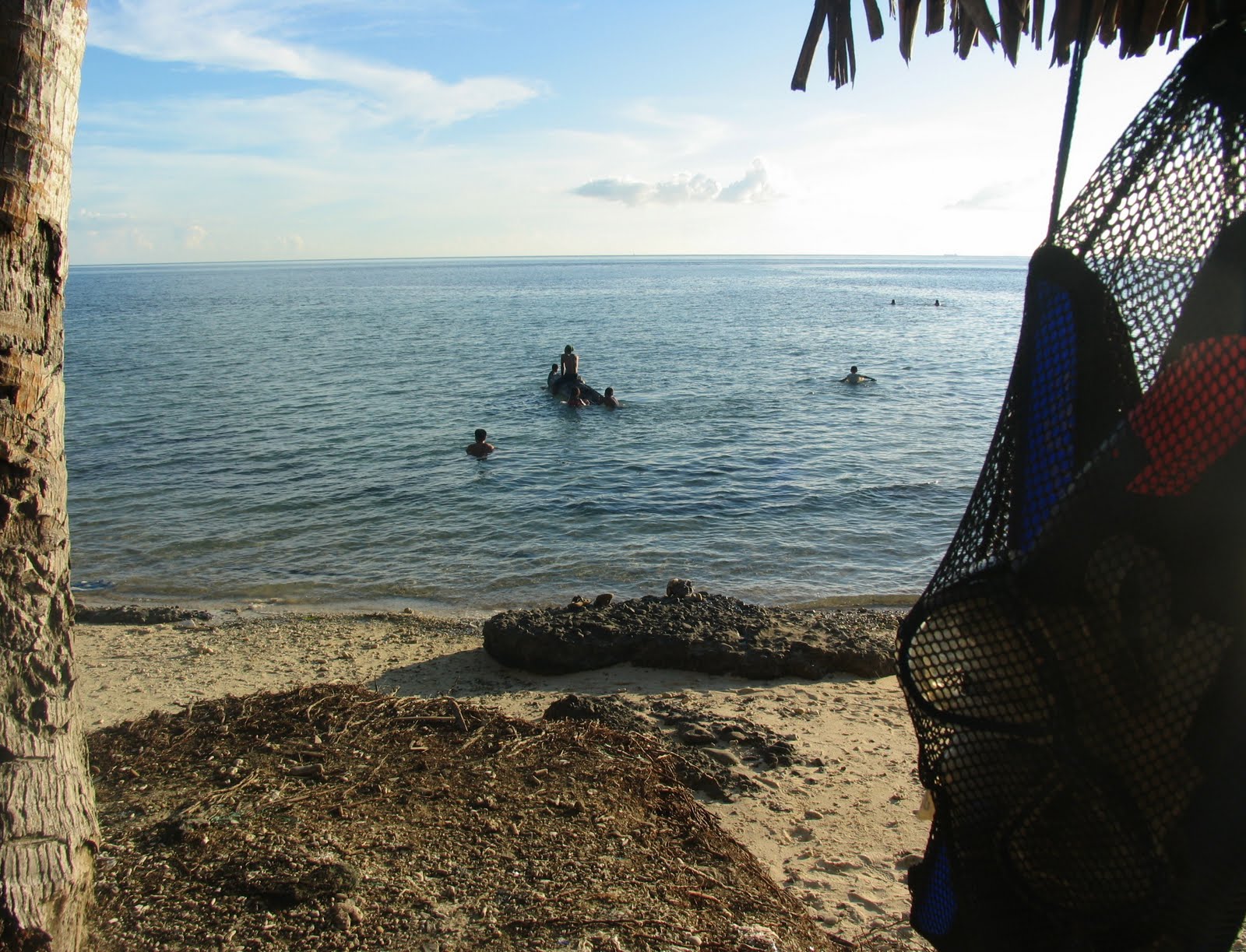


Monday, October 24, 2011
Untitled and Unfinished

For no particular someone or something, here goes:
I should not be writing right now
I should not be wearing my emotions and posing right now
But what do I do
When you cannot see me preen
Even though the broken shards of glass still reflect
I need you just as I need words to tell you I need you
Words are all you understand and do not understand
But know, my life is this poem
Struggling to be complete
Saturday, October 15, 2011
Postcard from Tawi-Tawi, Philippines

Somewhere I have traveled gladly beyond any experience (e.e.cummings)
Ha susulan Tawi-Tawi
Saturday, September 10, 2011
Quid Pro Quo
Blogging on the internet has come a long way. Talking about expressing one’s self, this is the right place to be to do the “write” stuff.
Talking about life and for the lack of it, I say I am standing on the edge of the earth. Other than hope and faith, I believe more in Tolkien’s Middle Earth or Gaiman’s Stardust. I believe that glass flowers can turn into fairies, and witches do exist to give you bright red apples when you starve in the middle of a forest. I believe in the curses of nature. I believe that what you give you will get in return. Quid pro quo.
I have stopped believing in faith realizing that it is not tangible. I have stopped holding on to hope because it did clip my wings. I am simply sashaying through the best of times and the worse of times. I toss a coin when I feel like it. Head or tail doesn’t matter I just enjoy tossing a coin and sometimes I imagine it being suspended in the air, falling only in a flick of my finger.
This is my present state of mind, suspended in the air. Inanimate moments of silence while staring at my own black shadow, overwhelmed by the smell of rain on melted earth as I bask in my own fears.
I have reached the pit some time in the past and the pendulum still sways.
Colored candies and holy smokes can only do so much to calm the rising tide inside and they are nothing but temporary salve.
I sleep less and I smoke a lot.
And yet I manage to be reasonable, but not quite enough to find the answers to my seemingly perpetual quest for the truth that I cannot handle.
I chanced upon an old friend today and somehow I felt a certain relief. There’s no point drowning in my own misery if there is still something I can do about it. What you give is what you get in return.
Quid Pro Quo.
Talking about life and for the lack of it, I say I am standing on the edge of the earth. Other than hope and faith, I believe more in Tolkien’s Middle Earth or Gaiman’s Stardust. I believe that glass flowers can turn into fairies, and witches do exist to give you bright red apples when you starve in the middle of a forest. I believe in the curses of nature. I believe that what you give you will get in return. Quid pro quo.
I have stopped believing in faith realizing that it is not tangible. I have stopped holding on to hope because it did clip my wings. I am simply sashaying through the best of times and the worse of times. I toss a coin when I feel like it. Head or tail doesn’t matter I just enjoy tossing a coin and sometimes I imagine it being suspended in the air, falling only in a flick of my finger.
This is my present state of mind, suspended in the air. Inanimate moments of silence while staring at my own black shadow, overwhelmed by the smell of rain on melted earth as I bask in my own fears.
I have reached the pit some time in the past and the pendulum still sways.
Colored candies and holy smokes can only do so much to calm the rising tide inside and they are nothing but temporary salve.
I sleep less and I smoke a lot.
And yet I manage to be reasonable, but not quite enough to find the answers to my seemingly perpetual quest for the truth that I cannot handle.
I chanced upon an old friend today and somehow I felt a certain relief. There’s no point drowning in my own misery if there is still something I can do about it. What you give is what you get in return.
Quid Pro Quo.
Thursday, September 08, 2011
Maria's Blues
Happiness she sought in one
and found in him an uncanny son.
Time-shared now long gone
for thoughts unreal, an adventure of fun.
Now she sits alone and waits,
understanding what love from hate.
Never knowing when he’ll open the gates,
to his heart she awaits for fate.
But in this time reality amends,
the enemy she tries to defend.
Nevertheless there will come an end,
when life itself death did befriend.
She sits still wondering,
staring into her mind she sulks.
A figure exterior proud,
yet chaos dwells within.
The scent of fruits surrounds her skin,
and an air of gloom holy facade, disfigured beauty,
searching endlessly for love unkind,
her words unwind, the longing for death.
and found in him an uncanny son.
Time-shared now long gone
for thoughts unreal, an adventure of fun.
Now she sits alone and waits,
understanding what love from hate.
Never knowing when he’ll open the gates,
to his heart she awaits for fate.
But in this time reality amends,
the enemy she tries to defend.
Nevertheless there will come an end,
when life itself death did befriend.
She sits still wondering,
staring into her mind she sulks.
A figure exterior proud,
yet chaos dwells within.
The scent of fruits surrounds her skin,
and an air of gloom holy facade, disfigured beauty,
searching endlessly for love unkind,
her words unwind, the longing for death.
Monday, September 05, 2011
Message from Pooh

If ever there is tomorrow when we’re not together.. there is something you must always remember. You are braver than you believe, stronger than you seem, and smarter than you think. But the most important thing is, even if we’re apart.. I’ll always be with you.
-- Winnie the Pooh
Giving Away
When you put yourself out there, bite more than you can chew and play a game you do not know the rules for sure, is that an emotional investment?
In a story about relationships, almost always there seems to be a double standard. He said she said kind of thing. He says we are just having a good time and she says let us see how far this goes, and he keeps doing what he does best and she is blind sided by giving it away not knowing nor understanding the consequences.
Like losing a piece of a puzzle that is she while he says that is all her.
It all starts with the slightest friendly gesture, one hello it is how it starts as the popular song would tell you.
Then they exchange stories, the wooing is tangled up in the friendly gestures and romantic innuendo is somewhere between the lines.
He digs deeper into her and after proving his sincerity she opens up allowing herself to be driven, taking the passenger's seat and pretty much enjoying the view of what is yet he would call an adventure.
He has invested to make sure his goal is achieved, while she is left to wonder, what now?
He has taken something from her.
She has given something away.
It is not a case of quid pro quo because what is at stake is not something one gives to get the same thing back. If only that is the case then there would be no more people walking around with their hearts on their sleeves.
No balls and chains there. Nobody forced no one into giving away what not. It is all you.
In a story about relationships, almost always there seems to be a double standard. He said she said kind of thing. He says we are just having a good time and she says let us see how far this goes, and he keeps doing what he does best and she is blind sided by giving it away not knowing nor understanding the consequences.
Like losing a piece of a puzzle that is she while he says that is all her.
It all starts with the slightest friendly gesture, one hello it is how it starts as the popular song would tell you.
Then they exchange stories, the wooing is tangled up in the friendly gestures and romantic innuendo is somewhere between the lines.
He digs deeper into her and after proving his sincerity she opens up allowing herself to be driven, taking the passenger's seat and pretty much enjoying the view of what is yet he would call an adventure.
He has invested to make sure his goal is achieved, while she is left to wonder, what now?
He has taken something from her.
She has given something away.
It is not a case of quid pro quo because what is at stake is not something one gives to get the same thing back. If only that is the case then there would be no more people walking around with their hearts on their sleeves.
No balls and chains there. Nobody forced no one into giving away what not. It is all you.
Saturday, August 27, 2011
A Homeric Simile of English, Filipino and Literature by Isagani Cruz
After hearing the buzz about James Soriano's article branding the Filipino language as the language of the streets published in the Manila Bulletin, a friend of mine posted a link to this beautiful speech by Isagani Cruz at a Literature Seminar. This is a fitting speech to cap off the buzz about the Filipino's national language.
It is beautifully written and everyone who appreciates both languages and the literature can appreciate this.
SPEECH DELIVERED AT THE CLOSING OF THE TWO-DAY LANGUAGE AND LITERATURE SEMINAR ON "RE-THINKING AND RE-DIRECTING PARADIGM AND PEDAGOGY IN THE TEACHING OF LANGUAGE AND LITERATURE" HELD AT FAR EASTERN UNIVERSITY, 19 FEBRUARY 2011, SPONSORED BY THE ALLIANCE OF LANGUAGE AND LITERATURE TEACHERS (ALLT)
Since you are teachers of language and literature, allow me to think aloud through a Homeric simile or, if you wish, a 17th-century conceit, or simply, a talinghaga.
I am an adulterer. I have a wife and two lovers.
My wife is the English language. I married her, making my marriage vows to her, my credentials, my MA and PhD in English, at the Ateneo and at the University of Maryland. She cooks my meals, gives me sustenance, by helping me participate in meetings for which I get paid. She bears my children, which are my English columns and books. I come home to her, I rush back into her arms when I want to feel secure. I love her. I love English.
I have a lover, who is female. My girlfriend is the Filipino language. She is much sexier than my wife, because she has all these terms for taste, smell, and touch – the senses that I use when making love. She is much younger than my wife; English was born about 1,500 years ago, but Filipino was born only in 1973. My girlfriend’s mother is Tagalog, but her father is Spanish and her grandmother is Chinese. That is why she is so attractive, because she is down to earth like the Tagalogs and practical like the Chinese, yet she speaks the language that God speaks. You know, of course, as the Spanish people put it so well, that “children speak in Italian, ladies speak in French, God speaks in Spanish, and the Devil speaks in English.” Yes, my girlfriend thinks my wife is a devil.
I have another lover. He is male. My boyfriend is literature. He understands me much more than my wife or my girlfriend does.
I have to struggle with my English, worrying about whether my behavior, my grammar, is perfect. I am always so careful when my wife is around. On the other hand, I cannot take my girlfriend to so-called respectable gatherings. People do not look kindly at me when I use Filipino to speak at big education or business or international conferences. Of course I enjoy caressing my girlfriend’s body, all the literary works written in Filipino, such as those by Bob Ong, but I am a bit apprehensive about boasting about her, because my wife is extremely jealous of her. When I travel outside the country, I have to keep introducing and apologizing for my girlfriend, something I do not have to do with my wife. Fortunately or unfortunately, my girlfriend is not well known outside the country, so I can take her there and limit our friends to the ten million or so of my compatriots working or living abroad. Abroad, my girlfriend is our shared secret and we can talk secretely without my wife knowing anything about her.
But the situation with my boyfriend is very different. I can take him with me anywhere I go. Nobody raises an eyebrow when we travel together, stay in the same hotel room, engage in public displays of affection. After all, boxers and basketball players hug each other tightly, cry on each other’s shoulders, even walk together with their arms on each other’s shoulders. People think it’s natural when I quote lines from literary pieces, when I have a book of poetry tucked under my arm as I walk down a street, when I read a novel in public. In fact, when I quote a line or two written by my boyfriend, people even applaud.
Of course, like other adulterers, I have to admit that I have a real psychological problem, for which I need to see a psychiatrist. I also have a spiritual problem, for which I need to see a priest or pastor. Moreover, I have a philosophical problem, because I do not really know who I love more or best or all the time.
I write in English in an English newspaper. I talk in English when I am in an international or even sometimes in a national conference. But I do not really like being with my wife all the time. I get bored with her and she gets bored with me. We have done so much together that we find that there is not much to do that now interests us. Besides, she always seems like a stranger to me. Like the Duke in Robert Browning’s poem, I feel like my wife, my last Duchess, bestows her favors on everyone, not just on me. I do not feel that she belongs to me. I do not own her nor does she want to be owned by me. She insists on her own rules and does not want to make allowances for my weaknesses.
On the other hand, I write in Filipino when I feel The Urge, when I feel hot and eager, when it is that time of the month when my hormones are raging and I just want to have someone I can have a very physical, very honest, very intimate, very enjoyable time. I do not have to worry about my behavior, my grammar, when I am with my girlfriend. I can let my hair down, whatever is left of it. Since she is young, she looks up to me and admires me. She does not have a personality cast in stone, so she does not mind changing when I want her to change. Since I give her a condo, a maid, a car, and spending money, I own her. I create words that she has to include in her vocabulary. I teach her. She is not my teacher, the way my wife is. She is my student, someone I mold according to my own likes and dislikes.
Still, I look forward to being alone with literature, being alone with a short story or a poem or a novel, watching a film based on a literary text, writing a literary text. My boyfriend combines the best traits of my English wife and my Filipino girlfriend. He is equally comfortable with both and he joins my wife and me when we entertain at home. He joins my girlfriend and me on trips abroad. My wife and my girlfriend, not being of the same gender as I am, do not really understand my needs, physical or psychological. But my boyfriend does. He excites me, keeps me interested, makes me eager to be with him, with his texts done from the time of Sophocles to the time of Jaime An Lim, Gemino Abad, Cristina Pantoja-Hidalgo, Oscar Campomanes, Ferdinand Lopez, and all the writers in this audience. He knows exactly how and where to excite me. He is one with me in emotions, in sex, in love, in everything.
It’s not easy being an adulterer. My wife does not want me to be with my girlfriend. My girlfriend wants me to leave my wife and to marry her instead. My boyfriend wants me to be alone with him, not with my wife nor with my girlfriend. On the rare occasions when I have all three of them around the dinner table, they seem cordial enough, though I know that they really cannot get along that well. My boyfriend keeps breaking the rules of grammar that my wife and my girlfriend make. My wife keeps telling me that she is from a very rich and old family and I would be a fool to leave her. My girlfriend says that my wife does not understand me and only she can.
It’s a mess. Sometimes I feel that I should just go into a Trappist monastery and renounce all language, keeping a vow of silence instead. But my boyfriend insists that he should come with me to the monastery. They let males in there, but not females.
Sometimes I feel that I should just find an uninhabited island among the 7,100 islands of the Philippines and live there without books, without anyone, but my boyfriend is already in my memory, my wife has molded my thoughts, and my girlfriend has conditioned my physical needs.
There is a practical solution, but I don’t want to take it. I could just leave the country and become an OFW in a country that does not speak English – and there are quite a number of these countries. That way, I will never use English, there will be no reason to use Filipino, and I will soon forget all the classic lines of literature that define my being. But there’s a catch. That country will have its own literature. I will surely find a new boyfriend. My boyfriend will surely introduce me to a new girlfriend. Before I know it, my new girlfriend will become my wife, and I will be back where I started.
I am glad I was invited to this seminar, because I can now rethink and redirect my personal paradigm. I can now teach myself a new way of looking at myself, rethink and redirect my pedagogy in teaching language and literature. In my imagination, I can be constructive. I can resolve issues. I can keep alive my live circuit. I can break out of my depression and get rid of all my repressions by letting the world know who exactly I am.
I am an adulterer, and proud of it. Maraming salamat po.
It is beautifully written and everyone who appreciates both languages and the literature can appreciate this.
SPEECH DELIVERED AT THE CLOSING OF THE TWO-DAY LANGUAGE AND LITERATURE SEMINAR ON "RE-THINKING AND RE-DIRECTING PARADIGM AND PEDAGOGY IN THE TEACHING OF LANGUAGE AND LITERATURE" HELD AT FAR EASTERN UNIVERSITY, 19 FEBRUARY 2011, SPONSORED BY THE ALLIANCE OF LANGUAGE AND LITERATURE TEACHERS (ALLT)
Since you are teachers of language and literature, allow me to think aloud through a Homeric simile or, if you wish, a 17th-century conceit, or simply, a talinghaga.
I am an adulterer. I have a wife and two lovers.
My wife is the English language. I married her, making my marriage vows to her, my credentials, my MA and PhD in English, at the Ateneo and at the University of Maryland. She cooks my meals, gives me sustenance, by helping me participate in meetings for which I get paid. She bears my children, which are my English columns and books. I come home to her, I rush back into her arms when I want to feel secure. I love her. I love English.
I have a lover, who is female. My girlfriend is the Filipino language. She is much sexier than my wife, because she has all these terms for taste, smell, and touch – the senses that I use when making love. She is much younger than my wife; English was born about 1,500 years ago, but Filipino was born only in 1973. My girlfriend’s mother is Tagalog, but her father is Spanish and her grandmother is Chinese. That is why she is so attractive, because she is down to earth like the Tagalogs and practical like the Chinese, yet she speaks the language that God speaks. You know, of course, as the Spanish people put it so well, that “children speak in Italian, ladies speak in French, God speaks in Spanish, and the Devil speaks in English.” Yes, my girlfriend thinks my wife is a devil.
I have another lover. He is male. My boyfriend is literature. He understands me much more than my wife or my girlfriend does.
I have to struggle with my English, worrying about whether my behavior, my grammar, is perfect. I am always so careful when my wife is around. On the other hand, I cannot take my girlfriend to so-called respectable gatherings. People do not look kindly at me when I use Filipino to speak at big education or business or international conferences. Of course I enjoy caressing my girlfriend’s body, all the literary works written in Filipino, such as those by Bob Ong, but I am a bit apprehensive about boasting about her, because my wife is extremely jealous of her. When I travel outside the country, I have to keep introducing and apologizing for my girlfriend, something I do not have to do with my wife. Fortunately or unfortunately, my girlfriend is not well known outside the country, so I can take her there and limit our friends to the ten million or so of my compatriots working or living abroad. Abroad, my girlfriend is our shared secret and we can talk secretely without my wife knowing anything about her.
But the situation with my boyfriend is very different. I can take him with me anywhere I go. Nobody raises an eyebrow when we travel together, stay in the same hotel room, engage in public displays of affection. After all, boxers and basketball players hug each other tightly, cry on each other’s shoulders, even walk together with their arms on each other’s shoulders. People think it’s natural when I quote lines from literary pieces, when I have a book of poetry tucked under my arm as I walk down a street, when I read a novel in public. In fact, when I quote a line or two written by my boyfriend, people even applaud.
Of course, like other adulterers, I have to admit that I have a real psychological problem, for which I need to see a psychiatrist. I also have a spiritual problem, for which I need to see a priest or pastor. Moreover, I have a philosophical problem, because I do not really know who I love more or best or all the time.
I write in English in an English newspaper. I talk in English when I am in an international or even sometimes in a national conference. But I do not really like being with my wife all the time. I get bored with her and she gets bored with me. We have done so much together that we find that there is not much to do that now interests us. Besides, she always seems like a stranger to me. Like the Duke in Robert Browning’s poem, I feel like my wife, my last Duchess, bestows her favors on everyone, not just on me. I do not feel that she belongs to me. I do not own her nor does she want to be owned by me. She insists on her own rules and does not want to make allowances for my weaknesses.
On the other hand, I write in Filipino when I feel The Urge, when I feel hot and eager, when it is that time of the month when my hormones are raging and I just want to have someone I can have a very physical, very honest, very intimate, very enjoyable time. I do not have to worry about my behavior, my grammar, when I am with my girlfriend. I can let my hair down, whatever is left of it. Since she is young, she looks up to me and admires me. She does not have a personality cast in stone, so she does not mind changing when I want her to change. Since I give her a condo, a maid, a car, and spending money, I own her. I create words that she has to include in her vocabulary. I teach her. She is not my teacher, the way my wife is. She is my student, someone I mold according to my own likes and dislikes.
Still, I look forward to being alone with literature, being alone with a short story or a poem or a novel, watching a film based on a literary text, writing a literary text. My boyfriend combines the best traits of my English wife and my Filipino girlfriend. He is equally comfortable with both and he joins my wife and me when we entertain at home. He joins my girlfriend and me on trips abroad. My wife and my girlfriend, not being of the same gender as I am, do not really understand my needs, physical or psychological. But my boyfriend does. He excites me, keeps me interested, makes me eager to be with him, with his texts done from the time of Sophocles to the time of Jaime An Lim, Gemino Abad, Cristina Pantoja-Hidalgo, Oscar Campomanes, Ferdinand Lopez, and all the writers in this audience. He knows exactly how and where to excite me. He is one with me in emotions, in sex, in love, in everything.
It’s not easy being an adulterer. My wife does not want me to be with my girlfriend. My girlfriend wants me to leave my wife and to marry her instead. My boyfriend wants me to be alone with him, not with my wife nor with my girlfriend. On the rare occasions when I have all three of them around the dinner table, they seem cordial enough, though I know that they really cannot get along that well. My boyfriend keeps breaking the rules of grammar that my wife and my girlfriend make. My wife keeps telling me that she is from a very rich and old family and I would be a fool to leave her. My girlfriend says that my wife does not understand me and only she can.
It’s a mess. Sometimes I feel that I should just go into a Trappist monastery and renounce all language, keeping a vow of silence instead. But my boyfriend insists that he should come with me to the monastery. They let males in there, but not females.
Sometimes I feel that I should just find an uninhabited island among the 7,100 islands of the Philippines and live there without books, without anyone, but my boyfriend is already in my memory, my wife has molded my thoughts, and my girlfriend has conditioned my physical needs.
There is a practical solution, but I don’t want to take it. I could just leave the country and become an OFW in a country that does not speak English – and there are quite a number of these countries. That way, I will never use English, there will be no reason to use Filipino, and I will soon forget all the classic lines of literature that define my being. But there’s a catch. That country will have its own literature. I will surely find a new boyfriend. My boyfriend will surely introduce me to a new girlfriend. Before I know it, my new girlfriend will become my wife, and I will be back where I started.
I am glad I was invited to this seminar, because I can now rethink and redirect my personal paradigm. I can now teach myself a new way of looking at myself, rethink and redirect my pedagogy in teaching language and literature. In my imagination, I can be constructive. I can resolve issues. I can keep alive my live circuit. I can break out of my depression and get rid of all my repressions by letting the world know who exactly I am.
I am an adulterer, and proud of it. Maraming salamat po.
Friday, August 26, 2011
James Soriano's Controversial branding of the Filipino language as "the language of the streets"
This article has been removed from the website of the Manila Bulletin because of the criticisms the article has received. I can relate to the sentiments but come to think of it, most of us who do not come from the National Capital Region or Luzon, do not speak Filipino as a mother tongue, which is a prestige register of the Tagalog language according to Wikipedia. My mother tongue is Bahasa Tausug and English was the medium of instruction at school, and Filipino was a grammar subject which I was not very good at. Until now I would still say "nawala ako" (I got lost) when meeting friends at a place not familiar to me while being here in Metro Manila, instead of saying "naligaw ako" which is the correct translation for "I got lost" and most of the time I am being laughed at. I sound Visayan when I speak Filipino and I am not even from the Visayas Region. Definitely, when I am in the streets of Metro Manila, Filipino is the language I use, not English, and definitely not Bahasa Tausug.
Language, learning, identity, privilege
By JAMES SORIANO
August 24, 2011, 4:06am
MANILA, Philippines — English is the language of learning. I’ve known this since before I could go to school. As a toddler, my first study materials were a set of flash cards that my mother used to teach me the English alphabet.
My mother made home conducive to learning English: all my storybooks and coloring books were in English, and so were the cartoons I watched and the music I listened to. She required me to speak English at home. She even hired tutors to help me learn to read and write in English.
In school I learned to think in English. We used English to learn about numbers, equations and variables. With it we learned about observation and inference, the moon and the stars, monsoons and photosynthesis. With it we learned about shapes and colors, about meter and rhythm. I learned about God in English, and I prayed to Him in English.
Filipino, on the other hand, was always the ‘other’ subject — almost a special subject like PE or Home Economics, except that it was graded the same way as Science, Math, Religion, and English. My classmates and I used to complain about Filipino all the time. Filipino was a chore, like washing the dishes; it was not the language of learning. It was the language we used to speak to the people who washed our dishes.
We used to think learning Filipino was important because it was practical: Filipino was the language of the world outside the classroom. It was the language of the streets: it was how you spoke to the tindera when you went to the tindahan, what you used to tell your katulong that you had an utos, and how you texted manong when you needed “sundo na.”
These skills were required to survive in the outside world, because we are forced to relate with the tinderas and the manongs and the katulongs of this world. If we wanted to communicate to these people — or otherwise avoid being mugged on the jeepney — we needed to learn Filipino.
That being said though, I was proud of my proficiency with the language. Filipino was the language I used to speak with my cousins and uncles and grandparents in the province, so I never had much trouble reciting.
It was the reading and writing that was tedious and difficult. I spoke Filipino, but only when I was in a different world like the streets or the province; it did not come naturally to me. English was more natural; I read, wrote and thought in English. And so, in much of the same way that I learned German later on, I learned Filipino in terms of English. In this way I survived Filipino in high school, albeit with too many sentences that had the preposition ‘ay.’
It was really only in university that I began to grasp Filipino in terms of language and not just dialect. Filipino was not merely a peculiar variety of language, derived and continuously borrowing from the English and Spanish alphabets; it was its own system, with its own grammar, semantics, sounds, even symbols.
But more significantly, it was its own way of reading, writing, and thinking. There are ideas and concepts unique to Filipino that can never be translated into another. Try translating bayanihan, tagay, kilig or diskarte.
Only recently have I begun to grasp Filipino as the language of identity: the language of emotion, experience, and even of learning. And with this comes the realization that I do, in fact, smell worse than a malansang isda. My own language is foreign to me: I speak, think, read and write primarily in English. To borrow the terminology of Fr. Bulatao, I am a split-level Filipino.
But perhaps this is not so bad in a society of rotten beef and stinking fish. For while Filipino may be the language of identity, it is the language of the streets. It might have the capacity to be the language of learning, but it is not the language of the learned.
It is neither the language of the classroom and the laboratory, nor the language of the boardroom, the court room, or the operating room. It is not the language of privilege. I may be disconnected from my being Filipino, but with a tongue of privilege I will always have my connections.
So I have my education to thank for making English my mother language.
Language, learning, identity, privilege
By JAMES SORIANO
August 24, 2011, 4:06am
MANILA, Philippines — English is the language of learning. I’ve known this since before I could go to school. As a toddler, my first study materials were a set of flash cards that my mother used to teach me the English alphabet.
My mother made home conducive to learning English: all my storybooks and coloring books were in English, and so were the cartoons I watched and the music I listened to. She required me to speak English at home. She even hired tutors to help me learn to read and write in English.
In school I learned to think in English. We used English to learn about numbers, equations and variables. With it we learned about observation and inference, the moon and the stars, monsoons and photosynthesis. With it we learned about shapes and colors, about meter and rhythm. I learned about God in English, and I prayed to Him in English.
Filipino, on the other hand, was always the ‘other’ subject — almost a special subject like PE or Home Economics, except that it was graded the same way as Science, Math, Religion, and English. My classmates and I used to complain about Filipino all the time. Filipino was a chore, like washing the dishes; it was not the language of learning. It was the language we used to speak to the people who washed our dishes.
We used to think learning Filipino was important because it was practical: Filipino was the language of the world outside the classroom. It was the language of the streets: it was how you spoke to the tindera when you went to the tindahan, what you used to tell your katulong that you had an utos, and how you texted manong when you needed “sundo na.”
These skills were required to survive in the outside world, because we are forced to relate with the tinderas and the manongs and the katulongs of this world. If we wanted to communicate to these people — or otherwise avoid being mugged on the jeepney — we needed to learn Filipino.
That being said though, I was proud of my proficiency with the language. Filipino was the language I used to speak with my cousins and uncles and grandparents in the province, so I never had much trouble reciting.
It was the reading and writing that was tedious and difficult. I spoke Filipino, but only when I was in a different world like the streets or the province; it did not come naturally to me. English was more natural; I read, wrote and thought in English. And so, in much of the same way that I learned German later on, I learned Filipino in terms of English. In this way I survived Filipino in high school, albeit with too many sentences that had the preposition ‘ay.’
It was really only in university that I began to grasp Filipino in terms of language and not just dialect. Filipino was not merely a peculiar variety of language, derived and continuously borrowing from the English and Spanish alphabets; it was its own system, with its own grammar, semantics, sounds, even symbols.
But more significantly, it was its own way of reading, writing, and thinking. There are ideas and concepts unique to Filipino that can never be translated into another. Try translating bayanihan, tagay, kilig or diskarte.
Only recently have I begun to grasp Filipino as the language of identity: the language of emotion, experience, and even of learning. And with this comes the realization that I do, in fact, smell worse than a malansang isda. My own language is foreign to me: I speak, think, read and write primarily in English. To borrow the terminology of Fr. Bulatao, I am a split-level Filipino.
But perhaps this is not so bad in a society of rotten beef and stinking fish. For while Filipino may be the language of identity, it is the language of the streets. It might have the capacity to be the language of learning, but it is not the language of the learned.
It is neither the language of the classroom and the laboratory, nor the language of the boardroom, the court room, or the operating room. It is not the language of privilege. I may be disconnected from my being Filipino, but with a tongue of privilege I will always have my connections.
So I have my education to thank for making English my mother language.
Wednesday, August 17, 2011
Life on a Tight Rope

The cigarette butt is burning my index and middle fingers, and as I inhale the last of its smoke, I saw a brief picture of my life in a minute, capping it off with my present state of mind.
It would be easier to just let things be and wallow in misery, because after all I have tried hard enough and the harder I try the more illusive dreams can be.
Sulking becomes a natural reflex cushioned only by the tears shed inside.
Incessantly I continue to run away unbridled by what is constant if only to keep me sane.
I count countless herds of sheep before I sleep at night and yet I still cannot seem to rest my mind, and sleep has become an enemy.
I am reminded of one of my trips to the islands in my province in Tawi-Tawi, Southern Philippines, sailing on a small motorized boat fit only for at least three persons. We entrusted our journey to our “bankero” who, without a compass used only the clouds' patterns and the wind direction as his guide and as always, we arrive at our destination without being eaten by sharks or being held hostage by pirates.
If only I could just pray to the sea for signs of my fate, I would journey through life with only the night stars as my guide.
I would not mind.
But life is not about wishful thinking and what if’s and what could-have-been's.
Life’s surprises do not come in pretty wrappings with colorful ribbons. They come in unanticipated fashion that can bring out the best and worst in you.
Life is about taking calculated steps on a tight rope balancing on thin air, and there is no looking back.
Whether I reach the other end or not solely depend on me.
Damn if I do and damn if I don’t.
Cupcake

Why are you afraid of me? Is it because I have sharp edges? Is it because I am too much to handle? or is it because you cannot picture me in colors and I am unpredictable, tameless and unbridled?
Or maybe you think I am tough enough that I cannot be pleased with the tiniest of things and the simplest of joys.
It is rather sad that you only see me in all of the facade and the bruises I try hard to keep, and when things get too comfortable or uncomfortable it is easier to say you've had enough because I am just too much to handle.
Funny how you have managed to lay your expectations and decide that it is my fault when they are not met.
You think you fall short not simply because you just do but because I am too much to handle.
You saw me in all of my frailties and vulnerabilities and still find me hard, cold as a rock.
You cannot picture me sweet because you already have a version of me in your mind and in your heart you would rather have me that way because that is how you have come to know me and it is easier that way.
I will not defend myself nor will I explain how or why I have come to be.
One thing is for sure, if I cease to be then I cease to be me.
A cupcake may look as sweet but that is not always the truth.
Subscribe to:
Posts (Atom)